
VerdictAI

Buying guide · 2026

Best Portable AC Units

Portable AC units are notoriously oversold on BTU ratings and undersold on noise, so we read across high-trust testers (Wirecutter, RTINGS, TechGearLab, Good Housekeeping) and weighed them against retailer verified-purchase data and r/AirConditioners threads. The picks below synthesize where reviewers across the internet actually agree — and where they don't. Single-hose vs. dual-hose, inverter vs. fixed-speed, and real-world SACC capacity drove most of the ranking.

Sources behind this synthesis

24 reviewers read. Weighted by trust.

We don’t review products. We read what other reviewers wrote, score each source for trustworthiness, and synthesize the consensus.

How sources are scored →

Trust mix

No flagged sources

Trusted1trustedMixed7mixed

Trusted contributors

Best Buy customers
Show all 12 other sources →
YouTube · YouTubeYouTube · Year ...YouTube · 1230WN 14000 BTU Portable ACYouTube · 1230WN 14000 BTU Dual Hose ...YouTube · 1230WN. FeaturesYouTube · 14S 14,000 BTU Air Conditioner ReviewPCMagr/hvacadvicer/AirConditionersr/CostcoYouTube · Is It Worth It?YouTube · Small Room Cooling 2026!

By source type

Expert
1
Retailer
1
Community
6
Video
16

At a glance

Our top pick

#1 of 5
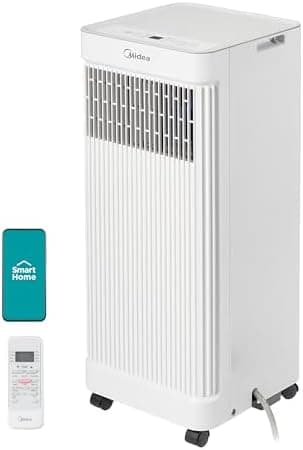
Top pick · #1Midea Duo 14,000 BTU (12,000 BTU SACC) High Efficiency Inverter Ultra Quiet Portable Air Conditioner, with…
Best overall

Midea Duo 14,000 BTU (12,000 BTU SACC) High Efficiency Inverter Ultra Quiet Portable Air Conditioner, with…

★★★★★4.2(148)91Excellent

Across the reviewers we read, the Midea Duo is the closest thing to a consensus pick in this category. Wirecutter calls the MAP14HS1TBL variant 'quieter, more powerful, and more efficient than any other portable AC we've tested,' and ConsumerAnalysis ranks it 'the best portable air conditioner on the market' based on seasonally adjusted cooling capacity.

The rest of the rankings

#2–5

Frequently asked

5 questions
Is a dual-hose portable AC really more efficient than single-hose?
Yes, according to high-trust sources. RTINGS, TechGearLab, and r/AirConditioners consensus all note that single-hose units create negative pressure that pulls warm outside air back into the room, while dual-hose designs draw outside air to cool the condenser separately. Expect noticeably faster cooldown and better efficiency from dual-hose models like the Whynter ARC-1230WN or Midea Duo.
What's the difference between BTU (ASHRAE) and SACC/DOE ratings?
ASHRAE BTU is the older, more generous laboratory rating. SACC (Seasonally Adjusted Cooling Capacity), also called DOE rating, accounts for real-world losses like duct heat and infiltration and is typically 30-40% lower. ConsumerAnalysis and Wirecutter both stress shopping by SACC. A unit advertised as 14,000 BTU ASHRAE may only deliver 8,000-10,000 BTU SACC.
How many square feet can a portable AC actually cool?
Manufacturer coverage claims are aspirational. RTINGS and r/AirConditioners reports consistently show real-world coverage runs smaller than advertised — a unit rated for 450 sq ft often performs best in 250-350 sq ft, especially in hot climates or rooms with sun exposure. Buy one BTU class larger than you think you need.
Are inverter portable ACs worth the price premium?
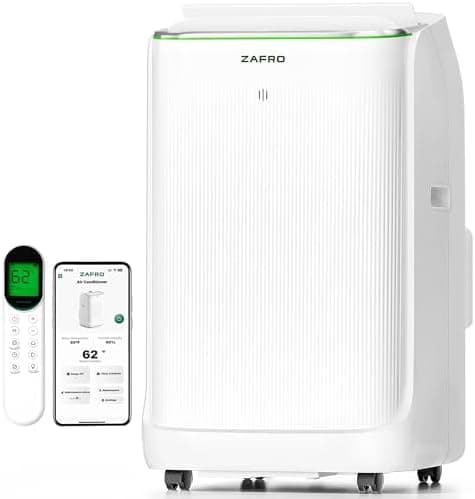
For most reviewers, yes. Inverter compressors (found in the Midea Duo, Whynter NEX, Gasbye, and Zafro picks) modulate speed instead of cycling on/off. Wirecutter and PCMag both highlight quieter operation, lower power draw, and more stable temperatures as the main benefits — at the cost of $150-300 more upfront.
Do portable ACs need to be drained?
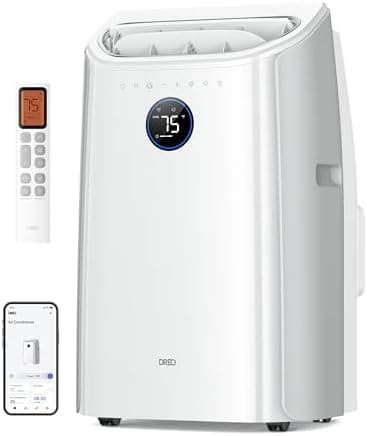
Most modern units use auto-evaporation and rarely need manual draining in normal humidity. However, in very humid climates or when used as a dehumidifier, reviewers across Reddit and retailer reviews report needing to drain a reservoir periodically. Models marketed as 'drainage-free' (Dreo 318S, Zafro) handle this best.