
VerdictAI

Reviewer consensus · 2026

Best All-in-One Printers of 2026What 58 reviewers actually think, trust-weighted

Shopping for an all-in-one printer in 2025 means navigating a market split between refillable-tank inkjets, monochrome lasers, and color laser MFPs, with sharp disagreement between expert testers and frustrated buyers over ink lock-in and reliability. The picks below synthesize testing from independent labs and specialist publications alongside verified-purchase reviews and r/printers community sentiment, weighted by source trust. Where high-trust expert verdicts diverge from retailer-customer impressions, we surface the disagreement rather than paper over it.

Sources behind this verdict

58 reviewers, weighted by source trust

58reviewers read

Weighted by source trust

We don’t review products. We read what other reviewers wrote, score each source for trustworthiness, and synthesize the consensus.

How sources are scored →

At a glance

Highest-rated by the consensus

#1 of 5
Top pick · #1Brother DCP-L2640DW Wireless Compact Monochrome Multi-Function Laser Printer with Copy and Scan, Duplex…
Best overall

Brother DCP-L2640DW Wireless Compact Monochrome Multi-Function Laser Printer with Copy and Scan, Duplex…

★★★★★4.3(3,355)86Great

Across the reviewers we read, the Brother DCP-L2640DW is the most-recommended mono laser all-in-one in this price band, and the trust-weighted signals back that up. Consumer Reports measured excellent black-and-white text quality with 5 pages printed in 17 seconds at roughly 5.6 cents per page, and Best Buy's verified-purchase aggregate sits around 92% positive, with buyers praising setup ease and wireless reliability.

The rest of the rankings

#2,5

Frequently asked

5 questions
Is a laser or inkjet all-in-one better for home use?
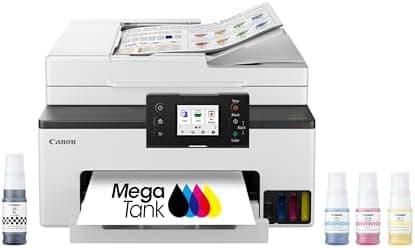
It depends on what you print. Across the reviewers we read, monochrome laser all-in-ones like the Brother DCP-L2640DW dominate text-heavy home offices because of low cost per page, fast first-page-out, and toner that doesn't dry up between uses. Refillable-tank inkjets like the Canon MAXIFY GX2020 win when you need color documents, photo capability, or very high page volumes. Cartridge inkjets are generally the worst long-term value unless you print infrequently and want low upfront cost.
Do I need an automatic document feeder (ADF) and duplex scanning?
If you scan or copy more than a few pages at a time, yes. A 35- or 50-sheet ADF turns a 20-page tax document from a 20-minute job into a one-button task. Single-pass duplex scanning (where the unit scans both sides in one pass) is a real time-saver for double-sided originals; the HP Color LaserJet Pro 3301sdw and several OfficeJet Pro models offer it, while cheaper units force you to flip the stack manually.
Are HP Instant Ink and similar subscription programs worth it?
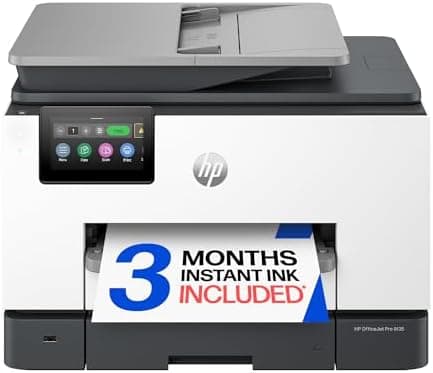
Specialist communities including r/printers and r/AmazonVine are vocal that HP's 'e'-series printers and Instant Ink enrollment can block third-party cartridges and disable printing if the subscription lapses. Reviewers note Instant Ink can be cost-effective for predictable monthly print volumes, but cartridge-free tank models like the Canon MAXIFY GX2020 or HP Smart Tank avoid the subscription question entirely.
Why do Brother printers get recommended so often on Reddit?
In r/printers threads we read, the consensus reasons are: Brother does not block third-party toner, monochrome lasers run for years without maintenance, and setup is generally less fussy than HP's app-driven onboarding. Independent lab testing of the DCP-L2640DW from Consumer Reports also rated print quality and speed favorably, reinforcing the community view.
How much should I spend on an all-in-one printer?
For light home use, $80–$150 gets a capable cartridge inkjet like the Brother MFC-J1360DW. $200–$250 buys a reliable monochrome laser with ADF and duplex. $300–$400 is the sweet spot for refillable-tank color inkjets and entry color laser MFPs aimed at small offices. Wide-format and high-volume office units push past $500.