
VerdictAI

Reviewer consensus · 2026

Best Gas Pressure Washers of 2026What 64 reviewers actually think, trust-weighted

Gas pressure washers reward buyers who weigh engine pedigree, pump type, and real-world GPM over headline PSI numbers, and the picks below reflect that. This roundup synthesizes what verified-purchase reviewers, mainstream tech and tool press, and specialist communities like r/pressurewashing, r/Tools, and r/AutoDetailing have written, weighted by source trust rather than any single headline rating. Where reviewers disagree, most notably around pump longevity and whether high-PSI machines are overkill for homeowners, we surface the conflict instead of smoothing it over.

Sources behind this verdict

64 reviewers, weighted by source trust

64reviewers read

Weighted by source trust

We don’t review products. We read what other reviewers wrote, score each source for trustworthiness, and synthesize the consensus.

How sources are scored →

At a glance

Compare

Pick any two for a head-to-head

Scores, pros, cons, and our verdict — side by side.

vs

Highest-rated by the consensus

#1 of 7
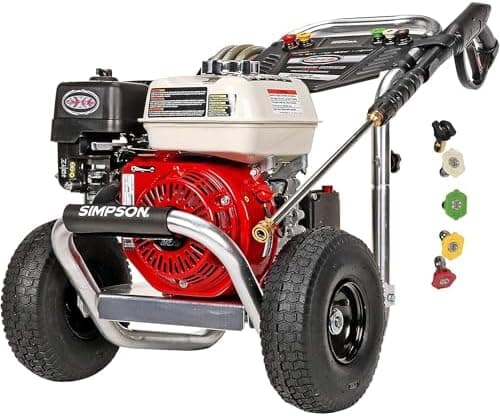
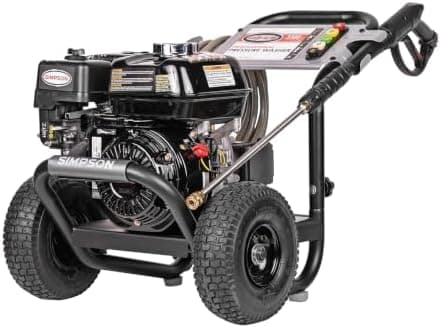
Top pick · #1SIMPSON Cleaning PS3228 PowerShot 3300 PSI Gas Pressure Washer, 2.5 GPM, Honda GX200 Engine, Includes Spray…
Best overall

SIMPSON Cleaning PS3228 PowerShot 3300 PSI Gas Pressure Washer, 2.5 GPM, Honda GX200 Engine, Includes Spray…

★★★★★4.3(2,333)87Great

Across the reviewers we read, the Simpson PS3228 PowerShot is the most consistently recommended residential-to-semi-pro gas unit in this pool. Its 3,300 PSI / 2.5 GPM output pairs a commercial Honda GX200 engine with an AAA triplex pump, and r/Tools commenters (a high-trust community thread) summarize the sentiment plainly: "Can't go wrong with a Honda engine," calling it a great low-to-mid-range washer for everyday residential work.

The rest of the rankings

#2,7

Frequently asked

5 questions
How much PSI and GPM do I actually need for a gas pressure washer?
Specialist-community consensus on r/pressurewashing is that GPM (flow) matters more than PSI for getting work done, and that you need roughly 3+ GPM to reliably run a surface cleaner for driveways. For typical residential cleaning, reviewers repeatedly note that a 3,000-3,400 PSI machine at 2.3-2.6 GPM is plenty, and that 4,000+ PSI risks damaging siding and wood.
Is a Honda engine worth paying extra for?
Across the reviewers we read, Honda GX-series engines draw consistently positive sentiment for reliable first-pull starts and longevity, and r/pressurewashing commenters call the upcharge worthwhile. That said, several Simpson models now ship with Simpson-branded CRX or GSX engines that verified-purchase reviewers report start reliably as well, so the engine premium is more about long-term durability confidence than day-one performance.
Why do reviewers worry about the pump, not just the engine?
Community discussion is blunt that the pump often fails before the engine. On r/pressurewashing, AAA pumps draw repeated complaints about premature failure, while CAT pumps are praised for longevity. Multiple owners stress that diligent engine and pump oil changes are the single biggest factor in how long any gas unit lasts.
Gas or electric pressure washer for home use?
Specialist communities note electric units now reach high PSI but generally lag gas on flow rate (GPM), which limits surface-cleaner performance. Gas wins on raw cleaning speed and cordless mobility; electric wins on noise, maintenance, and indoor-adjacent use. If you only clean a car and a small patio occasionally, reviewers frequently say gas is more machine than you need.
Can these run a surface cleaner for driveways?
Per r/pressurewashing, you want about 3+ GPM and roughly 4 inches of surface-cleaner diameter per GPM, so a 2.5 GPM unit reliably runs a 12-inch cleaner and a 4.0 GPM commercial unit handles a 24-inch one. Several owners specifically report the 4,400 PSI / 4.0 GPM class running a 24-inch surface cleaner without issue.