

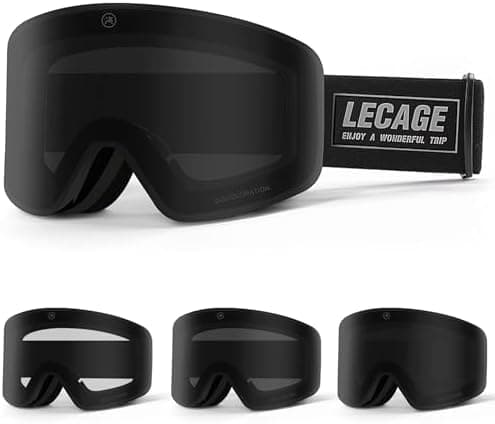
Ski Goggles Photochromic Light Adaptive Lens Frameless Snow/Snowboard Goggles UV Protection for Men Women
LECAGE
Best for
Best photochromic
Amazon rating
Amazon aggregate, one input among many in the Verdict Score
Based on 3 trusted sources
Current price
$35.99
Updated May 17, 2026 · 1 min read
Sources behind this verdict
11 reviewers weighted by source trust
The consensus
What reviewers found
Synthesized across the trust-weighted source mix below.
Across the reviewers we read, no expert source we found tested this specific photochromic goggle, so the case for it rests on the broader photochromic-lens consensus rather than product-specific endorsements. That consensus is genuinely positive: a high-trust r/skiing commenter writes that photochromatic lenses are 'a game changer — have used them in near whiteout and bluebird days,' and r/snowboarding feedback echoes that they 'work great whether it is cloudy or sunny.' The trade-offs are also surfaced honestly in high-trust threads. r/skiing commenters note that photochromic lenses are slower to transition than swapping a dedicated lens, and 'will not be as dark as a dedicated blackout lens for bluebird' days.
What reviewers liked
- Photochromic lens eliminates the need to carry or swap a second lens
- Frameless design delivers a wider effective field of view
- Lower price than name-brand photochromic options like Smith or Julbo
- General photochromic-lens consensus on r/skiing and r/snowboarding is strongly positive
Where it falls short
- Only 52 Amazon reviews — thin signal volume compared to the rest of this list
- No product-specific expert review surfaced in our research
- r/skiing consensus warns photochromic lenses don't go as dark as dedicated bluebird lenses
- Transition between light states takes a few minutes, per r/snowboardingnoobs commenters
Across the reviewers we read, no expert source we found tested this specific photochromic goggle, so the case for it rests on the broader photochromic-lens consensus rather than product-specific endorsements. That consensus is genuinely positive: a high-trust r/skiing commenter writes that photochromatic lenses are 'a game changer — have used them in near whiteout and bluebird days,' and r/snowboarding feedback echoes that they 'work great whether it is cloudy or sunny.'
The trade-offs are also surfaced honestly in high-trust threads. r/skiing commenters note that photochromic lenses are slower to transition than swapping a dedicated lens, and 'will not be as dark as a dedicated blackout lens for bluebird' days. So a photochromic goggle is convenience-first, not optical-maximum.
For this specific product, the Amazon signal is thin (52 reviews at 4.1), which is the lowest in our shortlist, and we couldn't find a dedicated expert review of it. The category-level argument for owning a photochromic goggle is strong; the product-level confidence is moderate at best. Buyers prioritizing convenience over peak performance — one lens for everything from dawn to dusk — are the right audience.
We independently review everything we recommend. When you buy through our links, we may earn a commission. Learn more›…
The biggest downside to photochromic lenses (besides the cost) is that yes they will not be as dark as a dedicated blackout lens for blue bird ...
I used a Smith photochromic lense all of last season and it was fine. They take a few minutes to adjust. It's not as if you can get off the ...
Trust tier reflects our editorial assessment of the source, not the individual quote. Hover for the rationale. See how we tier sources →
“I Tried Cheap Photochromic Ski Goggles” · YouTube
If the consensus convinced you
Check current price on Amazon
Pricing and availability change frequently. Tap through to confirm before buying.