
VerdictAI

Reviewer consensus · 2026

Best Thickness Planers of 2026What 50 reviewers actually think, trust-weighted

Thickness planers are a major shop investment, so we synthesized what verified-purchase buyers, mainstream tool reviewers, and specialist woodworking communities have already written rather than testing units ourselves. The candidate pool included several hand planes and accessories, but the picks below focus strictly on true benchtop thickness planers, weighted toward high-trust community consensus from r/woodworking and r/BeginnerWoodWorking and corroborated by retailer-verified reviews. Where reviewers disagree—snipe, dust collection, and helical-head value come up repeatedly—we surface the conflict instead of smoothing it over.

Sources behind this verdict

50 reviewers, weighted by source trust

50reviewers read

Weighted by source trust

We don’t review products. We read what other reviewers wrote, score each source for trustworthiness, and synthesize the consensus.

How sources are scored →

At a glance

Compare

Pick any two for a head-to-head

Scores, pros, cons, and our verdict — side by side.

vs

Highest-rated by the consensus

#1 of 5
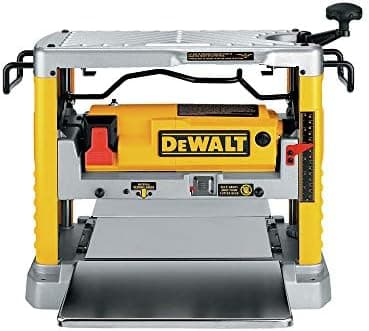
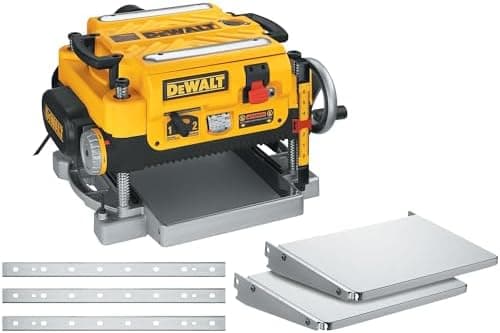
Top pick · #1DEWALT Thickness Planer, 13-inch Wood Planer, Three Knife Two Speed, 15 Amp, 20,000 RPM Motor (DW735X)
Best overall

DEWALT Thickness Planer, 13-inch Wood Planer, Three Knife Two Speed, 15 Amp, 20,000 RPM Motor (DW735X)

★★★★★4.7(7,477)92Excellent

Across the reviewers we read, the DEWALT DW735X is the default recommendation for a benchtop thickness planer. Verified-purchase volume is the highest in this pool—7,477 Amazon ratings averaging 4.7—and that aligns with specialist-community sentiment: r/woodworking threads describe DeWalt planers as 'solid' with 'plenty of Helix upgrades and tutorials' available down the road, and r/BeginnerWoodWorking commenters repeatedly call it the 'gold standard' with multiple feed rates, cheap blades, and sturdy construction.

The rest of the rankings

#2,5

Frequently asked

5 questions
What is the best thickness planer for a home shop?
Across the reviewers we read, the DEWALT DW735X is the most frequently recommended all-rounder for hobbyist and small-pro shops. Specialist community threads repeatedly call it the 'gold standard' for its two-speed feed, three-knife cutterhead, and easy availability of cheap replacement blades. The Makita 2012NB and DEWALT DW734 are the usual runners-up cited for slightly lower price or compact size.
Are helical cutterheads worth it on a benchtop planer?
Specialist subreddit consensus is that helical (or 'shelix') heads meaningfully reduce tearout on figured and knotty wood and run a bit quieter, at the cost of a higher price. Reviewers note that straight-knife machines like the DW735 still produce an impressive finish, and many owners buy a straight-knife planer and add a helical head later as an upgrade rather than paying for a factory helical unit.
Why does my planer leave snipe at the ends of boards?
Snipe—a slightly deeper cut at the leading and trailing ends of a board—is the single most-cited complaint across reviewers, and the DEWALT DW735 in particular is described in community threads as 'notorious' for it out of the box. Owners report that infeed/outfeed support tables, supporting the board level as it enters and exits, and backing boards together dramatically reduce it.
Is the Makita 2012NB worth its higher price?
Verified-purchase and community reviewers consistently describe the Makita 2012NB as a high-quality, quiet, compact machine with excellent finish and easy blade changes, with several calling it the best value despite costing more than competitors. The main caveat raised is mixed reports on stock dust collection, which some say needs the optional hood to work well.
Are cheap thickness planers like VEVOR any good?
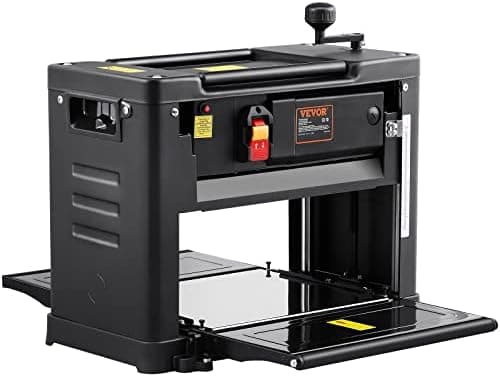
Reports are mixed. Some verified buyers say their VEVOR unit planed hardwoods like maple cleanly after a simple blade rotation, while community and group commenters flag inconsistent quality control and weak customer service for the brand. For shoppers prioritizing long-term reliability, the higher-trust consensus still points to established brands.